
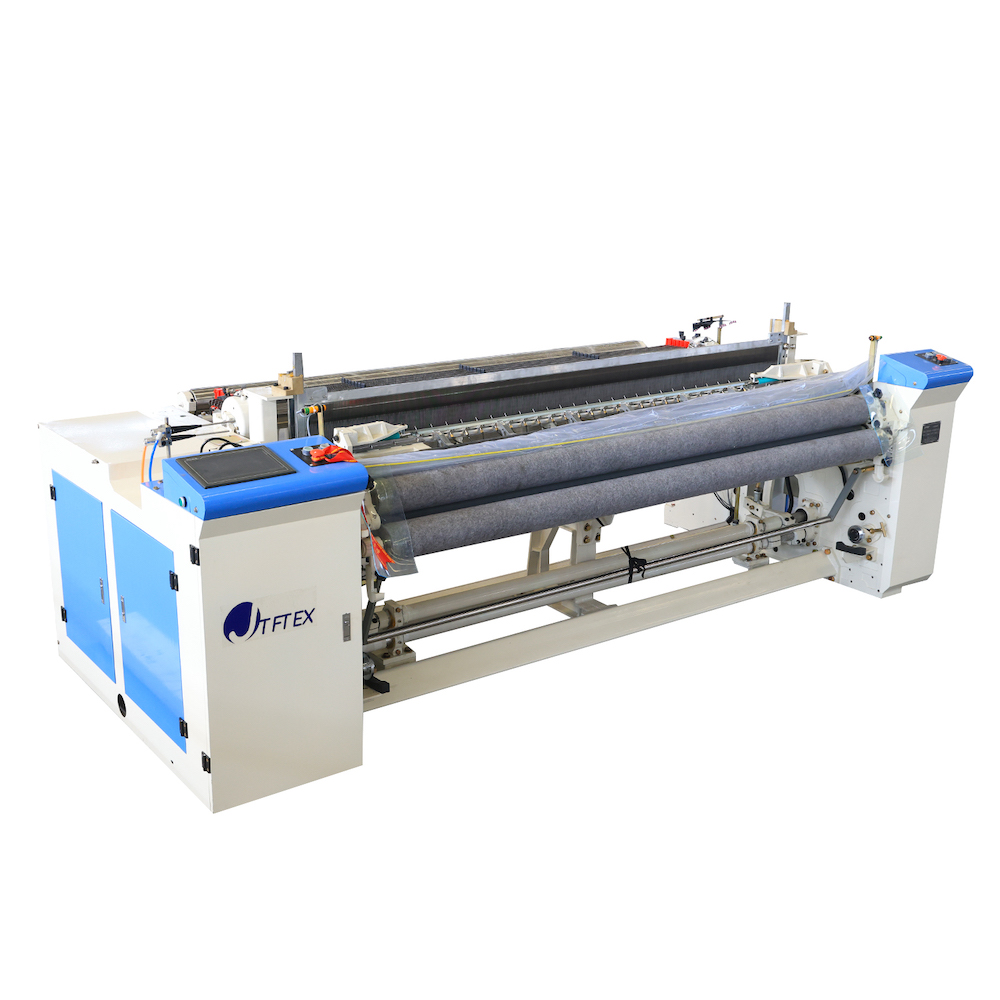
What Are Air Jet Looms & Why They Dominate Industrial Raw Material Weaving
Air jet looms are high-efficiency industrial weaving machines that use high-pressure air for weft insertion. Compared with traditional shuttle looms and rapier looms, air jet weaving machines feature higher speed, lower noise, simpler operation, and stronger adaptability to special fibers. They have become the core equipment for industrial raw material weaving, especially for high-precision electronic cloth, high-density insulation materials, and high-strength fiberglass products.
The non-contact weft insertion of air jet looms reduces yarn damage greatly, ensuring stable quality and high output in industrial fabric production.

Air jet loom for electronic cloth weaving, insulation material weaving and fiberglass weaving
Applications of Air Jet Looms in Electronic Cloth Weaving
Electronic cloth is a key base material for printed circuit boards (PCBs). High-quality electronic cloth requires high strength, excellent insulation, corrosion resistance, and ultra-uniform texture. Air jet looms are the most suitable equipment for electronic cloth weaving thanks to their high precision and stability.
In electronic cloth production, air jet looms control air pressure, weft insertion speed, and yarn tension strictly to avoid breakage of fragile fiberglass yarn. Intelligent control systems ensure consistent weaving density, while automatic yarn break detection reduces material waste.
Key Operation Tips for Electronic Cloth Weaving
- Adjust air pressure of air jet looms based on yarn fineness to prevent breakage or misinsertion
- Keep warp and weft tension stable for a flat and even electronic cloth surface
- Clean nozzles and guide rails of air jet weaving machines regularly to maintain weaving efficiency
Applications of Air Jet Looms in Insulation Material Weaving
Insulation materials (including fiberglass insulation cloth, ceramic fiber insulation cloth) are widely used in construction, aerospace, electric power, and chemical industries. High-performance insulation materials need high weaving density and excellent air tightness. Air jet looms improve efficiency by 30%–50% in insulation material weaving compared with traditional looms.
Air jet weaving machines provide stable and gentle weft insertion, protecting fiber integrity and enhancing the insulation performance of insulation materials. Flexible parameter settings support the production of various thickness and density for different application scenarios.
Core Advantages of Air Jet Looms in Insulation Material Weaving
- Weft insertion speed: 1000–2000 meters per minute
- Non-contact design reduces fiber damage
- Wide adaptability to fiberglass, ceramic fiber and other special fibers
Applications of Air Jet Looms in Fiberglass Weaving
Fiberglass has high strength, high temperature resistance, corrosion resistance, and good insulation, but its brittle and fuzz-prone nature brings challenges to weaving. Air jet looms solve these pain points efficiently in fiberglass weaving.
With optimized nozzles and stable air flow, air jet looms reduce yarn breakage and fluffing. Intelligent tension control keeps yarn tension stable during the whole production, ensuring uniform texture, high strength, and good flatness of fiberglass cloth.
Quality Control for Fiberglass Weaving with Air Jet Looms
- Inspect raw fiberglass yarn before production
- Calibrate air pressure, speed and tension of air jet weaving machines
- Test finished cloth for thickness, density and flatness
Key Factors to Improve Air Jet Looms Performance in Industrial Weaving
Key Factors to Improve Air Jet Looms Performance in Industrial Weaving
- Raw Material Quality
High-quality yarn ensures stable running of air jet looms in electronic cloth weaving, insulation material weaving, and fiberglass weaving.
- Precise Parameter Adjustment
Match air pressure, weft insertion speed and tension with material features for optimal results.
- Regular Equipment Maintenance
Clean and lubricate nozzles, guide rails and shedding parts regularly to keep air jet weaving machines in good condition.
Clean and lubricate nozzles, guide rails and shedding parts regularly to keep air jet weaving machines in good condition.
Conclusion
Air jet looms are essential for high-quality industrial raw material weaving. They play an irreplaceable role in electronic cloth weaving, insulation material weaving, and fiberglass weaving, improving both production efficiency and product stability. With proper operation and maintenance, air jet weaving machines help manufacturers produce high-performance industrial fabrics and gain stronger market competitiveness.
FAQ
Q1: What is the best loom for electronic cloth weaving?
Air jet looms are the best choice for electronic cloth weaving due to their high precision, stable tension control, and low yarn breakage rate.
Air jet looms are the best choice for electronic cloth weaving due to their high precision, stable tension control, and low yarn breakage rate.
Q2: Can air jet looms weave fiberglass efficiently?
Yes. The non-contact weft insertion system of air jet looms reduces damage to brittle fiberglass yarn, greatly improving efficiency and quality in fiberglass weaving.
Yes. The non-contact weft insertion system of air jet looms reduces damage to brittle fiberglass yarn, greatly improving efficiency and quality in fiberglass weaving.
Q3: How to improve insulation material weaving quality?
Optimize air pressure, yarn tension, and maintenance of air jet looms. High-density weaving and stable parameters ensure better insulation performance.
Optimize air pressure, yarn tension, and maintenance of air jet looms. High-density weaving and stable parameters ensure better insulation performance.
Q4: How much can air jet looms improve production efficiency?
Air jet looms can improve weaving efficiency by 30%–50% compared with traditional shuttle looms and rapier looms in industrial raw material weaving.
Air jet looms can improve weaving efficiency by 30%–50% compared with traditional shuttle looms and rapier looms in industrial raw material weaving.


Leave A Comment